
According to the Operations Center and to the algorithm type, the group of daemons to which one or more daemons can be associated is identified; the system selects one of them according to the elaboration load in order to parallelize the elaborations on the different present daemons.
Algorithms Types
|
LTALID |
LTALDESCRIZIONE |
|---|---|
|
5 |
Distance calculation |
|
4 |
Real Daily rielaboration |
|
6 |
Evening Booking |
|
1 |
Elaboration Scheduling Model on Period |
|
2 |
Model Standardization |
|
3 |
TSP Day Optimization |
|
7 |
Real Booking |
Daemon Definition
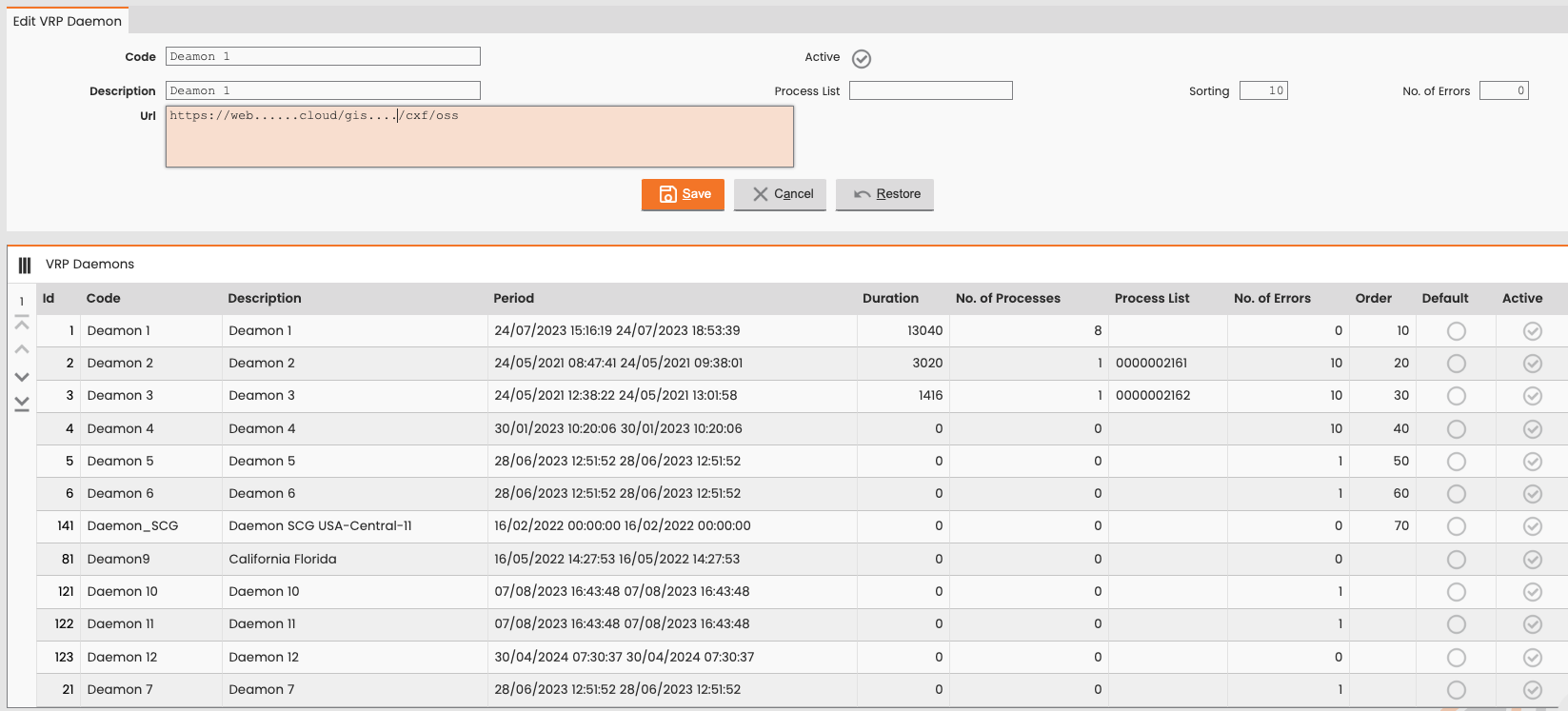
In the daemon definition mask it is required to enter Code, Description and URL of the service. The URL has the following format:
http://{nome server}:{porta}/{nome servizio}/cxf/oss
|
|
|---|
|
Fig - Daemon definition |
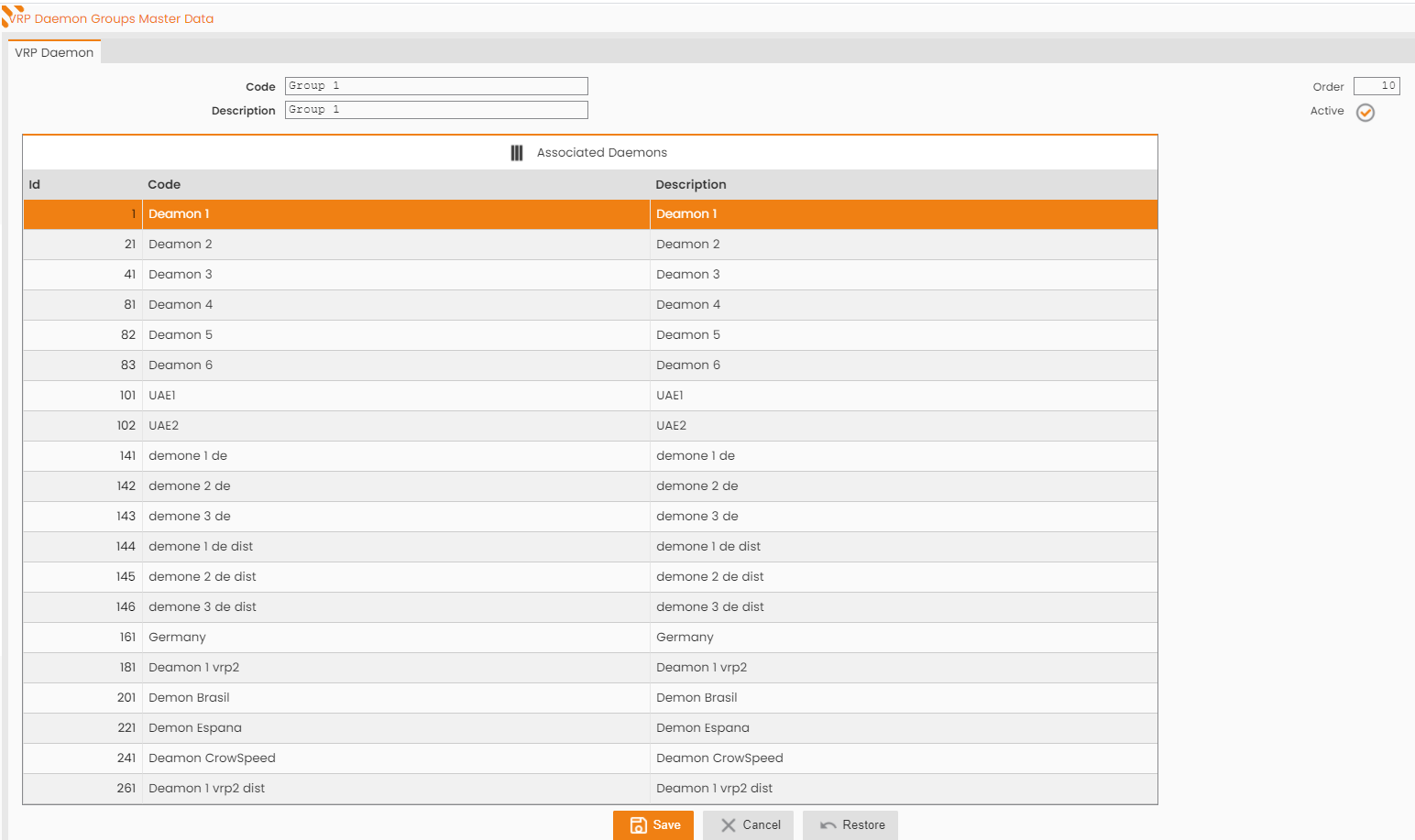
The definition of Daemon Groups requires the insertion of the code and description of the group and the selection of one or more Daemons that are associated with the group. Generally for each group, an alternative group is created (e.g. "Group 1" and "Group 1 distance"), to which the same daemons as associated with the main group will be used exclusively for the distance calculation.
Daemon Groups definition
|
|
|---|
|
Fig - Daemon Group Definition |
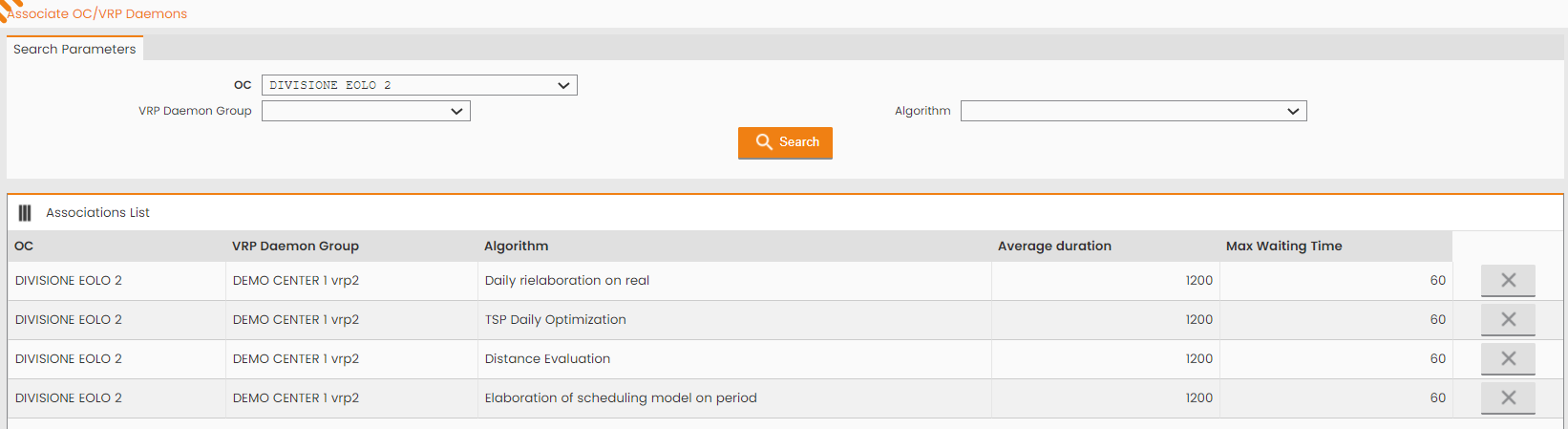
The last step of the daemons configuration foresees the association of the groups just defined to the Branches (Operations Centres) for the different algorithms present in the system. An example of the configuration is shown below:
Associate OC/ VRP Daemons
|
|---|
|
Fig - Associate OC/VRP Daemons |
In particular, the configuration of the "Distance Evaluation" algorithm differs from the others for the used Daemon Group (usually a dedicated daemon group is created), and for the "Average Duration" and "Waiting Time" which are generally much shorter than the other algorithms.
Average Duration
It is the time of allocation of the daemon made by the system following a VRP call for the specific algorithm, it corresponds to the average duration of the call itself.
The daemon is released at the end of each scheduling process and is reactivated at the start of a new process.
This time interval should be wide enough to ensure the termination of the individual scheduling processes in order to avoid that the automatic process launch task launches a second execution of the same algorithm on the same OC overlapping the one already in progress.
The distance calculation is generally very fast (of the order of a few seconds) so it makes no sense to set a longer duration and allocate the daemon for a too long time.
Maximum waiting time
Indicates the time (in seconds) beyond which the Scheduling process is NOT queued to the list of processes on Daemons associated with the Daemons Group indicated.
It makes no sense to wait longer than the average processing time.
The longer the Maximum Waiting Time the more likely that the new scheduling processes will be queued up with those currently queuing up.