
Scenario
A large air-conditioning service provider manages a workforce of 150 field technicians who service residential and commercial clients. The business experiences seasonal fluctuations in demand, with peak periods during the summer and winter months due to heating and cooling system issues.
Challenge
-
During peak seasons, the demand for service appointments exceeds the available workforce, leading to delays in service, missed SLAs (Service Level Agreements), and decreased customer satisfaction.
-
Conversely, during off-peak periods, underutilized technicians increase operational costs without generating proportional revenue.
Solution with Capacity Planning
The Capacity Planning feature helps the business optimize workforce allocation to meet fluctuating demand.
-
Simulate the Demand’s Peak: The system integrates historical service data to predict demand for each time period.
-
Simulate the Capacity’s availability: The Capacity Planning tool assesses the availability of technicians and their skills.
-
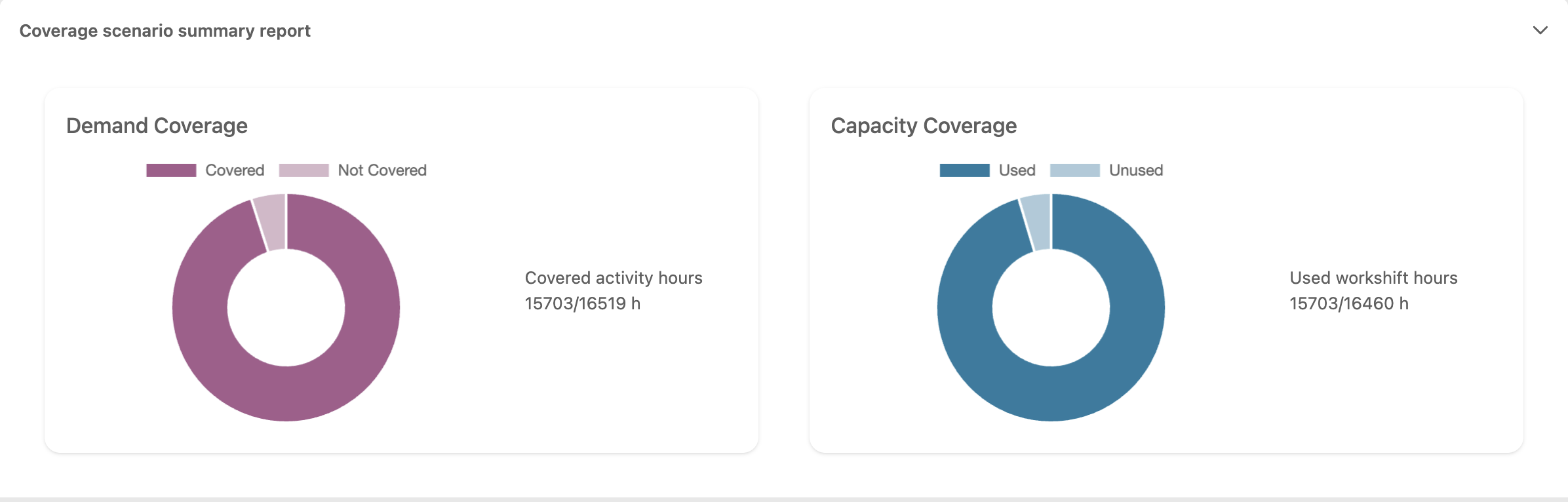
Compute Coverage Scenario: The tool tries to optimize the demand’s coverage using an algorithm to assign activities to resources.
-
During peak periods:
-
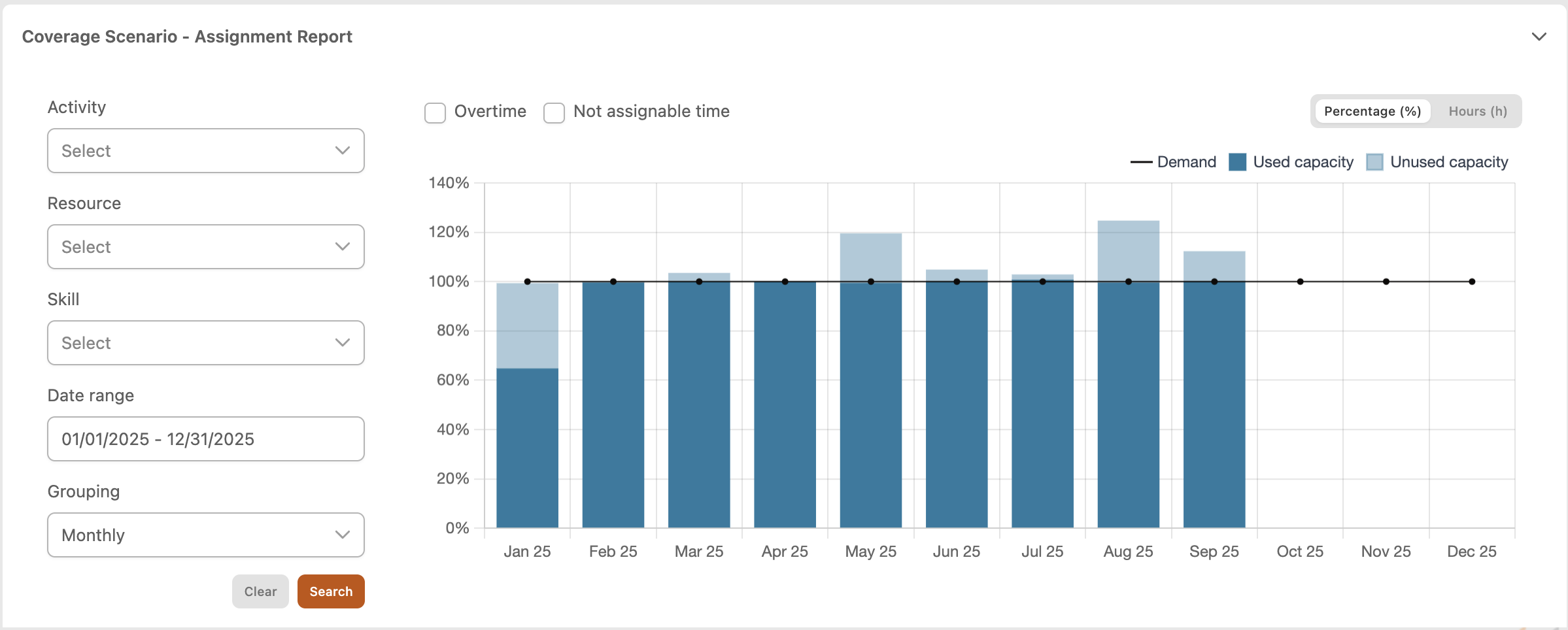
The tool identifies gaps between demand and available capacity.
-
It allows to fill the gap hiring temporary resources, scheduling overtime for existing staff, or rescheduling non-critical maintenance tasks.
-
-
During off-peak periods:
-
It highlights underutilization risks, allowing the user to organize training sessions or reduce overtime hours.
-
-
-
Dynamic Realignment: The system continuously can be adapted to any emergency. For example, if an unexpected cold front increases heating service requests, the tool recalculates the coverage status.
|
|
|---|
Benefits
-
Improved Customer Satisfaction: Timely service delivery reduces response times during critical periods.
-
Optimized Costs: Balancing labor costs and demand avoids unnecessary expenditures during off-peak times.