
|
Http Verb |
POST |
|---|---|
|
Url |
/integration/workforce/r2/resources |
|
Permissions required |
Core Additional Parameters: Edit (fsm.core.additionalparameter.edit) Resource Configuration: Edit (fsm.core.resource.configuration.edit) Organizational Structure Entities: View (fsm.core.structure.view) or Organizational Structure Entities: Edit (fsm.core.structure.edit) WO Configuration: View (fsm.core.workorder.configuration.view) or WO Configuration: Edit (fsm.core.workorder.configuration.edit) |
|
Last Modified Version |
r2 |
|
Tech Tags |
|
|
Available Async |
No |
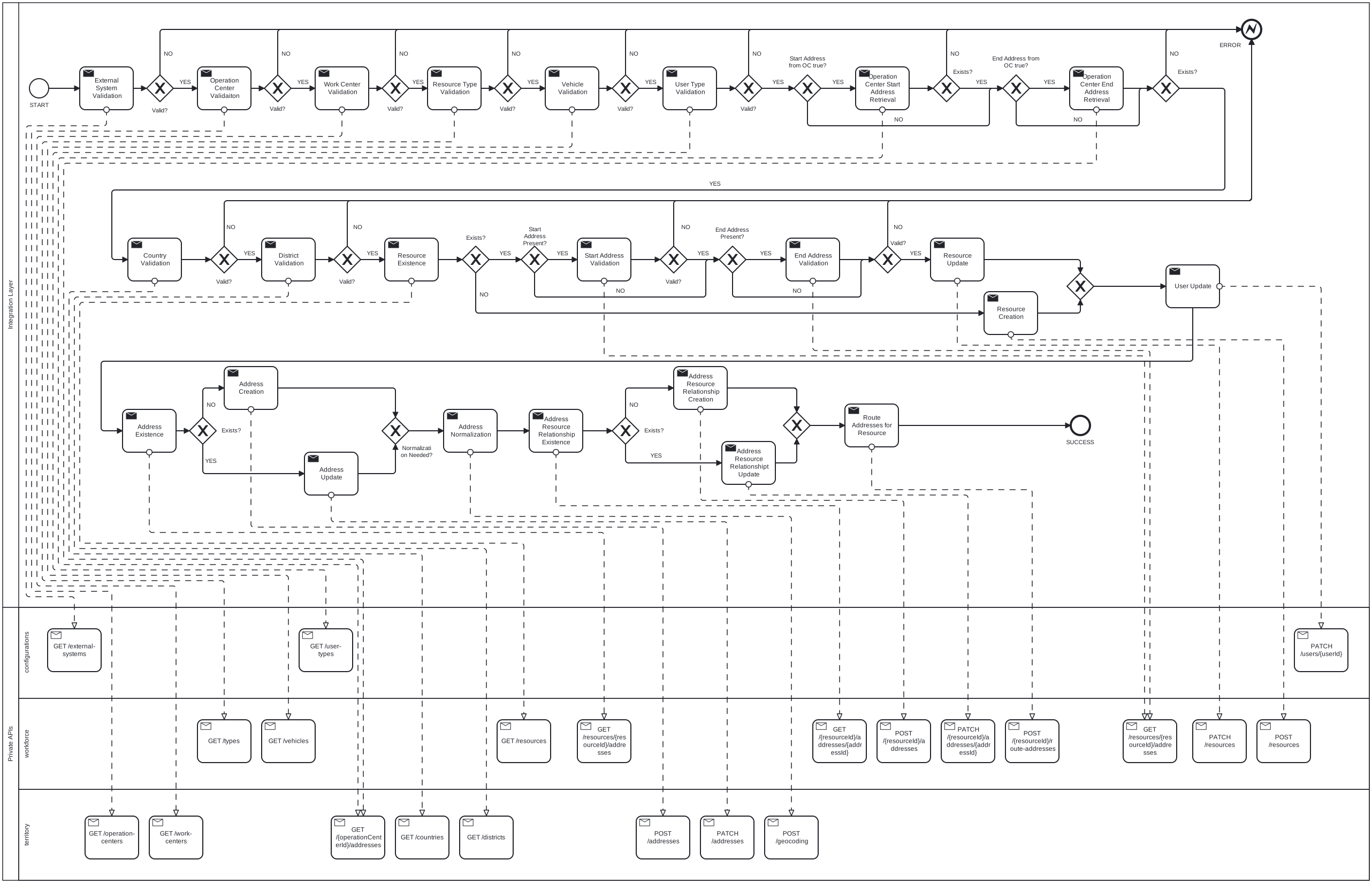
BPMN Diagram
Business Logic
This Integration API inserts or updates a Resource with his addresses.
Insert Only Validations
System verifies that if startAddressFromOperationCenter or endAddressFromOperationCenter has been provided (value=true), then operationCenterCode must have been provided.
Upsert Validations
System verifies that if startAddressFromOperationCenter or endAddressFromOperationCenter has been provided, then operationCenterCode must have been provided.
System verifies that endDate is greater than startDate and sysdate.
System verifies Permission Required and starts the elaboration that is organized in steps.
STEP 1 - External System Validation
System takes Input fields and checks their existence in internal configuration.
API Verb: GET
Resource: External Systems
Input: externalSystemCode, active=true
Output: externalSystemId
If System can obtain the Output fields → continue to next step.
If System can’t obtain the Output fields → responds with error. Elaboration is stopped.
STEP 2 - Operation Center Validation
System takes Input fields and checks their existence in internal configuration.
API Verb: GET
Resource: Operation Centers
Input: operationCenterCode, active=true
Output: operationCenterId
If System can obtain the Output fields → continue to next step.
If System can’t obtain the Output fields → responds with error. Elaboration is stopped.
STEP 3 - Work Center Validation
System takes Input fields and checks their existence.
This step is skipped if Input fields are absent.
If System can obtain the Output fields → continue to next step.
If System can’t obtain the Output fields → responds with error. Elaboration is stopped.
STEP 4 - Resource Type Validation
System takes Input fields and checks their existence.
If System can obtain the Output fields → continue to next step.
If System can’t obtain the Output fields → responds with error. Elaboration is stopped.
STEP 5 - Vehicle Validation
System takes Input fields and checks their existence. System verifies also the validity of the Vehicle.
This step is skipped if Input fields are absent.
If System can obtain the Output fields → continue to next step.
If System can’t obtain the Output fields → responds with error. Elaboration is stopped.
STEP 6 - User Type Validation
System takes Input fields and checks their existence.
This step is skipped if Input fields are absent.
API Verb: GET
Resource: /api/configurations/identity/r1/user-types (Foundation)
Input: userTypeCode
Output: userTypeId
If System can obtain the Output fields → continue to next step.
If System can’t obtain the Output fields → responds with error. Elaboration is stopped.
STEP 7 - Operation Center Address Retrieval
System takes Input fields and retrieve the address.
This step is skipped if startAddressFromOperationCenter is false and endAddressFromOperationCenter is false.
STEP 7a- Operation Center Start Address Retrieval
System takes Input fields and retrieve the start address.
-
If startAddressCode is not provided:
-
The system will retrieve the default address from the operating center.
-
main=true and description=null
-
-
-
If startAddressCode is provided:
-
The system searches for the operating center address that matches that specific code.
-
main=null and description=startAddressCode
-
-
This step is skipped if startAddressFromOperationCenter is false.
API Verb: GET
Resource: Addresses
Input: operationCenterId, main=(true OR null), description=(startAddressCode OR null)
Output: startAddressId
If System can obtain the Output fields → continue to next step.
If System can’t obtain the Output fields → responds with error. Elaboration is stopped.
Error Type:
-
Others - see link in Resource
STEP 7b - Operation Center End Address Retrieval
System takes Input fields and retrieve the end address.
-
If endAddressCode is not provided:
-
The system will retrieve the default address from the operating center.
-
main=true and description=null
-
-
-
If endAddressCode is provided:
-
The system searches for the operating center address that matches that specific code.
-
main=null and description=endAddressCode
-
-
This step is skipped if endAddressFromOperationCenter is false.
API Verb: GET
Resource: Addresses
Input: operationCenterId, main=(true OR null), description=(endAddressCode OR null)
Output: endAddressId
If System can obtain the Output fields → continue to next step.
If System can’t obtain the Output fields → responds with error. Elaboration is stopped.
Error Type:
-
Others - see link in Resource
STEP 8 - Address Validation
The following steps are executed for each Address in Input.
STEP 8a - Country Validation
System takes Input fields and checks their existence in internal configuration.
If System can obtain the Output fields → continue to next step.
If System can’t obtain the Output fields → responds with error. Elaboration is stopped.
Error Type:
-
Others - see link in Resource
STEP 8b - District Validation
System takes Input fields and checks their existence in internal configuration.
If System can obtain the Output fields → continue to next step.
If System can’t obtain the Output fields → responds with error. Elaboration is stopped.
Error Type:
-
Others - see link in Resource
STEP 9 - Resource Existence
System takes Input fields and checks their existence.
API Verb: GET
Resource: Resource
Input: identificationNumber
Output: resourceId, operationCenterId, loan
If System can’t obtain the Output fields → Creation → continue to step Resource Creation
If System can obtain the Output fields → system evaluates the operationCenterId in Input:
-
if operationCenterId in Input is not present, system takes only the resource in output with loan=false → Update → continue to next step.
-
if operationCenterId in Input is present, System verifies that in output
-
if resource not exist → Creation → continue to step Resource Creation
-
If a resource exists, the system verify if exist a resource with same operationCenter
-
if exists selects the one with loan=false→ Update → continue to step next step.
-
if not exist → responds with error. Elaboration is stopped.
-
-
Error Type:
-
Others - see link in Resource
STEP 10 - Resource’s Address - Start Address Validation
System takes Input fields and checks their existence in internal configuration.
This step is skipped if Input fields are absent or if the startAddressFromOperationCenter field is set to true or if the startAddressCode appears also in ‘Addresses’ object.
API Verb: GET
Resource: /workforce/resources/r1/resources/{resourceId}/addresses
Input: resourceId, description=startAddressCode
Output: startAddressId
If System can obtain the Output fields → continue to next step.
If System can’t obtain the Output fields → responds with error. Elaboration is stopped.
Error Type:
-
Others - see link in Resource
STEP 11 - Resource’s Address - End Address Validation
System takes Input fields and checks their existence in internal configuration.
This step is skipped if Input fields are absent or if the endAddressFromOperationCenter field is set to true or if the endAddressCode appears also in ‘Addresses’ object.
API Verb: GET
Resource: /workforce/resources/r1/resources/{resourceId}/addresses
Input: resourceId, description=endAddressCode
Output: endAddressId
If System can obtain the Output fields → continue to next step.
If System can’t obtain the Output fields → responds with error. Elaboration is stopped.
Error Type:
-
Others - see link in Resource
STEP 12 - Resource Creation
System takes Input fields and creates the entity (only not on loan).
API Verb: POST
Resource: Resource
Input: surname, name, birthDate, email, operationCenterId, mobilePhone, identificationNumber, secondaryIdentificationNumber, resourceTypeId, color, vehicleId, order, workCenterId, startDate, endDate
Output: Response State, resourceId (only for SUCCESS)
If Response State is SUCCESS → continue to step User Update.
If Response State is ERROR → elaboration is stopped. See Response payload fields.
Error Type:
-
Others - see link in Resource
STEP 13 - Resource Update
System takes Input fields and updates the entity (only not on loan).
This step is skipped if Input fields are absent.
API Verb: PATCH
Resource: Resource
Input: resourceId, surname, name, birthDate, email, mobilePhone, identificationNumber, secondaryIdentificationNumber, resourceTypeId, color, vehicleId, order, workCenterId, startDate, endDate
Output: Response State
If Response State is SUCCESS → continue to next step.
If Response State is ERROR → elaboration is stopped. See Response payload fields.
Error Type:
-
Others - see link in Resource
STEP 14 - User Update
System takes Input fields and updates the entity.
This step is skipped if Input fields are absent.
API Verb: PATCH
Resource: /api/configurations/identity/r1/users/{userId}
Input: resourceId, username, userTypeId
Output: Response State
If Response State is SUCCESS → continue to next step.
If Response State is ERROR → elaboration is stopped. See Response payload fields.
Error Type:
-
Others - see link in Resource
Step 15 - Address Management
The following steps are executed for each Address in Input.
This step is skipped if addresses are absent.
STEP 15a - Address Existence
System takes Input fields and checks their existence in internal configuration.
The system filters the records to be processed based on these two filters:
-
startAddressCode if they appear in ‘Addresses’ object and the startAddressFromOperationCenter field is not true
-
endAddressCode if they appear in ‘Addresses’ object and the endAddressFromOperationCenter field is not true
API Verb: GET
Resource: /workforce/resources/r1/resources/{resourceId}/addresses
Input: resourceId, description=address.code
Output: addressId
If System can obtain the Output fields → Update → continue to step Address Update.
If System can’t obtain the Output fields → Creation → continue to next step.
Error Type:
-
Others - see link in Resource
STEP 15b - Address Creation
System takes Input fields and creates the entity.
API Verb: POST
Resource: Addresses
Input: code=address.code, description=address.code, countryCode, districtCode, municipality, municipalityCode, postalCode, locality, toponym, street, streetNumber, streetNumberExtension, floor, lot, staircase, apartment, directions, xCoordinate, yCoordinate, description
Output: Response State, addressId (only for SUCCESS)
If Response State is SUCCESS → continue to step Address Normalization.
If Response State is ERROR → elaboration is stopped. See Response payload fields.
Error Type:
-
Others - see link in Resource
STEP 15c - Address Update
System takes Input fields and updates the entity.
API Verb: PATCH
Resource: Addresses
Input: addressId, countryCode, districtCode, municipality, municipalityCode, postalCode, locality, toponym, street, streetNumber, streetNumberExtension, floor, lot, staircase, apartment, directions, xCoordinate, yCoordinate, description
Output: Response State
If Response State is SUCCESS → continue to next step.
If Response State is ERROR → elaboration is stopped. See Response payload fields.
Error Type:
-
Others - see link in Resource
STEP 15d - Address Normalization
System evaluates input fields xCoordinate and yCoordinate to decide if Address Normalization is necessary.
This step is skipped if Input fields are absent.
If Response State is SUCCESS → continue to next step.
If Response State is ERROR → elaboration is stopped. See Response payload fields.
Error Type:
-
Others - see link in Resource
STEP 15e - Address Resource Relationship Existence
System takes Input fields and retrieve the addresses related with the resource.
API Verb: GET
Resource: {resourceId}/addresses/{addressId}
Input: resourceId, addressId
Output: resourceId, addressId
If System can obtain the Output fields → Update → continue to step Address Resource Relationship Update.
If System can’t obtain the Output fields → Creation → continue to next step.
Error Type:
-
Others - see link in Resource
STEP 15f - Address Resource Relationship Creation
System takes Input fields and creates the entity.
API Verb: POST
Resource: {resourceId}/addresses
Input: resourceId, addressId, resourceAddressDescription
Output: Response State, relationshipId (only for SUCCESS)
If Response State is SUCCESS → continue to step Route Addresses
If Response State is ERROR → elaboration is stopped. See Response payload fields.
Error Type:
-
Others - see link in Resource
STEP 15g - Address Resource Relationship Update
System takes Input fields and retrieve the address.
API Verb: PATCH
Resource: {resourceId}/addresses/{addressId}
Input: resourceId, addressId, resourceAddressDescription
Output: Response State
If Response State is SUCCESS → continue to next step.
If Response State is ERROR → elaboration is stopped. See Response payload fields.
Error Type:
-
Others - see link in Resource
STEP 16 - Start/End Address Validation
This step is executed if one or both of the following variable startAddressId and endAddressId are null.
STEP 16a - Resource’s Address - Start Address Validation
System takes Input fields and checks their existence in internal configuration.
This step is skipped if the startAddressId variable is already populated or if Input fields are absent or if the startAddressFromOperationCenter field is set to true
API Verb: GET
Resource: /workforce/resources/r1/resources/{resourceId}/addresses
Input: resourceId, description=startAddressCode
Output: startAddressId
If System can obtain the Output fields → continue to next step.
If System can’t obtain the Output fields → responds with error. Elaboration is stopped.
Error Type:
-
Others - see link in Resource
STEP 16b - Resource’s Address - End Address Validation
System takes Input fields and checks their existence in internal configuration.
This step is skipped if the endAddressId variable is already populated or if Input fields are absent or if the endAddressFromOperationCenter field is set to true
API Verb: GET
Resource: /workforce/resources/r1/resources/{resourceId}/addresses
Input: resourceId, description=endAddressCode
Output: endAddressId
If System can obtain the Output fields → continue to next step.
If System can’t obtain the Output fields → responds with error. Elaboration is stopped.
Error Type:
-
Others - see link in Resource
STEP 17 - Route Addresses
System takes Input fields and creates/update the entity.
API Verb: POST
Resource: resources/{resourceId}/route-addresses
Input: resourceId, startAddressId, endAddressId
Output: Response State
If Response State is SUCCESS → elaboration is stopped. See Response payload fields.
If Response State is ERROR → elaboration is stopped. See Response payload fields.
Error Type:
-
Others - see link in Resource
Path Parameters
As their name suggests, they are included in the URL path of the endpoint.
Not applicable.
Query String Parameters
Start with a ? and includes parameters listed one after the another separated by &.
Not applicable.
Header Parameters
Parameters included in the request headers. Generally, request headers are used to keep authorization parameters.
Default.
Request Body Parameters
Request body parameters are used when clients send data to the API. They are shipped in a JSON Object only in POST, PUT, or PATCH requests.
|
|
Field |
Description |
Mandatory |
Constraint |
|
|---|---|---|---|---|---|
|
1 |
resource |
externalSystemCode |
External System Code |
Y |
Not Blank |
|
2 |
surname |
Surname (Mandatory in Creation) |
N |
Absent or Not Blank |
|
|
3 |
name |
Name (Mandatory in Creation) |
N |
Absent or Not Blank |
|
|
4 |
birthDate |
BirthDate |
N |
|
|
|
5 |
|
|
N |
|
|
|
6 |
mobilePhone |
Mobile Phone Number |
N |
|
|
|
7 |
identificationNumber |
Identification Number |
Y |
Not Blank |
|
|
8 |
secondaryIdentificationNumber |
Secondary Identification Number |
N |
Absent or Not Blank |
|
|
9 |
typeCode |
Resource Type Code |
N |
Absent or Not Blank |
|
|
10 |
color |
Color |
N |
|
|
|
11 |
vehicleCode |
Vehicle Code |
N |
Absent or Null or Not Blank |
|
|
12 |
order |
Order |
N |
|
|
|
13 |
operationCenterCode |
Operation Center Code (Mandatory in Creation) |
N |
Absent or Not Blank |
|
|
14 |
workCenterCode |
Work Center Code |
N |
Absent or Null or Not Blank |
|
|
15 |
startDate |
Resource Start Date |
N |
|
|
|
16 |
endDate |
Resource End Date |
N |
|
|
|
17 |
startAddressCode |
Code of the start address of the resource |
N |
Absent or Not Blank |
|
|
18 |
endAddressCode |
Code of the end address of the resource |
N |
Absent or Not Blank |
|
|
19 |
startAddressFromOperationCenter |
Flag that specifies if the start address should be taken from the operation center |
N |
Absent or Not Null |
|
|
20 |
endAddressFromOperationCenter |
Flag that specifies if the end address should be taken from the operation center |
N |
Absent or Not Null |
|
|
21 |
username |
Resource username |
N |
Absent or Not Null |
|
|
22 |
userTypeCode |
User Type Code |
N |
Absent or Not Null |
|
|
23 |
addresses (minOccurs=0, maxOccurs=N) |
code |
Code of the Address. Should |
Y |
Not Blank |
|
24 |
countryIsoAlphaCode |
Acronym of Nation (2 or 3 letters acronym) (Mandatory in Creation) |
N |
Absent or Not Blank |
|
|
25 |
districtAcronym |
Acronym of District |
N |
Absent or Null or Not Blank |
|
|
26 |
municipality |
Municipality |
N |
Absent or Not Blank |
|
|
27 |
municipalityCode |
Municipality code (Mandatory in Creation) |
N |
|
|
|
28 |
locality |
Locality |
N |
|
|
|
29 |
postalCode |
PostalCode |
N |
|
|
|
30 |
toponym |
Toponym |
N |
|
|
|
31 |
street |
Street |
N |
|
|
|
32 |
streetNumber |
StreetNumber |
N |
|
|
|
33 |
streetNumberExtension |
Street number extension |
N |
|
|
|
34 |
floor |
Floor |
N |
|
|
|
35 |
lot |
Lot |
N |
|
|
|
36 |
staircase |
Staircase |
N |
|
|
|
37 |
apartment |
Apartment |
N |
|
|
|
38 |
directions |
Directions |
N |
|
|
|
39 |
description |
Address Description |
N |
|
|
|
40 |
yCoordinate |
Latitude |
N |
|
|
|
41 |
xCoordinate |
Longitude |
N |
|
|
|
42 |
resourceAddressDescription |
Description for the address related with the resource |
N |
Absent or Not Blank |
The objects in input could have also the extension object that allows to add additional, customized data to this API. More info here How to use APIs: Custom data via Extension.
Request example
Insert
{
  "extension": {},
  "resource": {
    "extension": {
        "myFieldName": "myValue"
    },
    "externalSystemCode": "SAP",
    "surname": "Rossi",
    "name": "Mario",
    "birthDate": "1970-01-01",
    "email": "mario.rossi@gmail.com",
    "mobilePhone": "34111",
    "identificationNumber": "mario.rossi",
    "typeCode": "RESTYPE",
    "color": "#FF990C",
    "vehicleId":
    "order": 10,
    "operationCenterCode": "OPCODE",
    "workCenterCode": "WRKCNTCODE",
    "startAddressCode": "HOUSE1",
    "endAddressCode": "HOUSE2",
    "startAddressFromOperationCenter": false,
    "endAddressFromOperationCenter": false
  },
  "addresses": [
    {
      "extension": {
         "myFieldName": "myValue"
      },
      "code": "HOUSE1",
      "countryIsoAlphaCode": "IT",
      "districtAcronym": "PN",
      "municipality": "Fiume Veneto",
      "postalCode": "33080",
      "toponym": "via",
      "street": "Bassi",
      "streetNumber": 101,
      "resourceAddressDescription": "mario.rossi Primary HOUSE"
    }
  ]
}
Update
{
  "extension": {},
  "resource": {
    "extension": {
        "myFieldName": "myValue"
    },
    "externalSystemCode": "SAP",
    "identificationNumber": "mario.rossi",
    "startAddressCode": "mario.rossi HOUSE 2",
    "endAddressCode": "mario.rossi HOUSE 2",
    "startAddressFromOperationCenter": false,
    "endAddressFromOperationCenter": false
  },
  "addresses": [
    {
      "extension": {
         "myFieldName": "myValue"
      },
      "code": "HOUSE3",
      "countryIsoAlphaCode": "IT",
      "districtAcronym": "RM",
      "municipality": "Roma",
      "toponym": "via",
      "street": "Roma",
      "streetNumber": 50,
      "resourceAddressDescription": "mario.rossi Third HOUSE"
    }
  ]
}
Response documentation
Response payload fields
Compliant with RFC Standard https://www.rfc-editor.org/rfc/rfc9457.html
Extension fields:
|
Field |
Description |
Note |
|---|---|---|
|
id |
Id of the resource created |
Only for SUCCESS in Insert case |
|
code |
Extension member of a Problem Details Object that contains the error code |
Only for ERROR |
Response example
{
  "id": 123456
}
{
  "type": "about:blank",
  "title": "Not Found",
  "status": 404,
  "detail": "External system string does not exist",
  "instance": "/integration/workforce/r1/resources",
  "code": "IA001_001"
}