
|
Http Verb |
POST |
|---|---|
|
Url |
/integration/documents/r1/dynamic-forms/sheets |
|
Permissions required |
Core Additional Parameters: Edit (fsm.core.additionalparameter.edit) WorkOrder: View (fsm.core.workorder.view) or WorkOrder: Edit (fsm.core.workorder.edit) WO Configuration: View (fsm.core.workorder.configuration.view) or WO Configuration: Edit (fsm.core.workorder.configuration.edit) Technical Object: View (fsm.core.technicalobject.facility.view) or Technical Object: Edit (fsm.core.technicalobject.facility.edit) Customer: View (fsm.core.technicalobject.customer.view) or Customer: Edit (fsm.core.technicalobject.customer.edit) |
|
Last Modified Version |
r1 |
|
Tech Tags |
MULTILANGUAGE-FIELDS |
|
Available Async |
No |
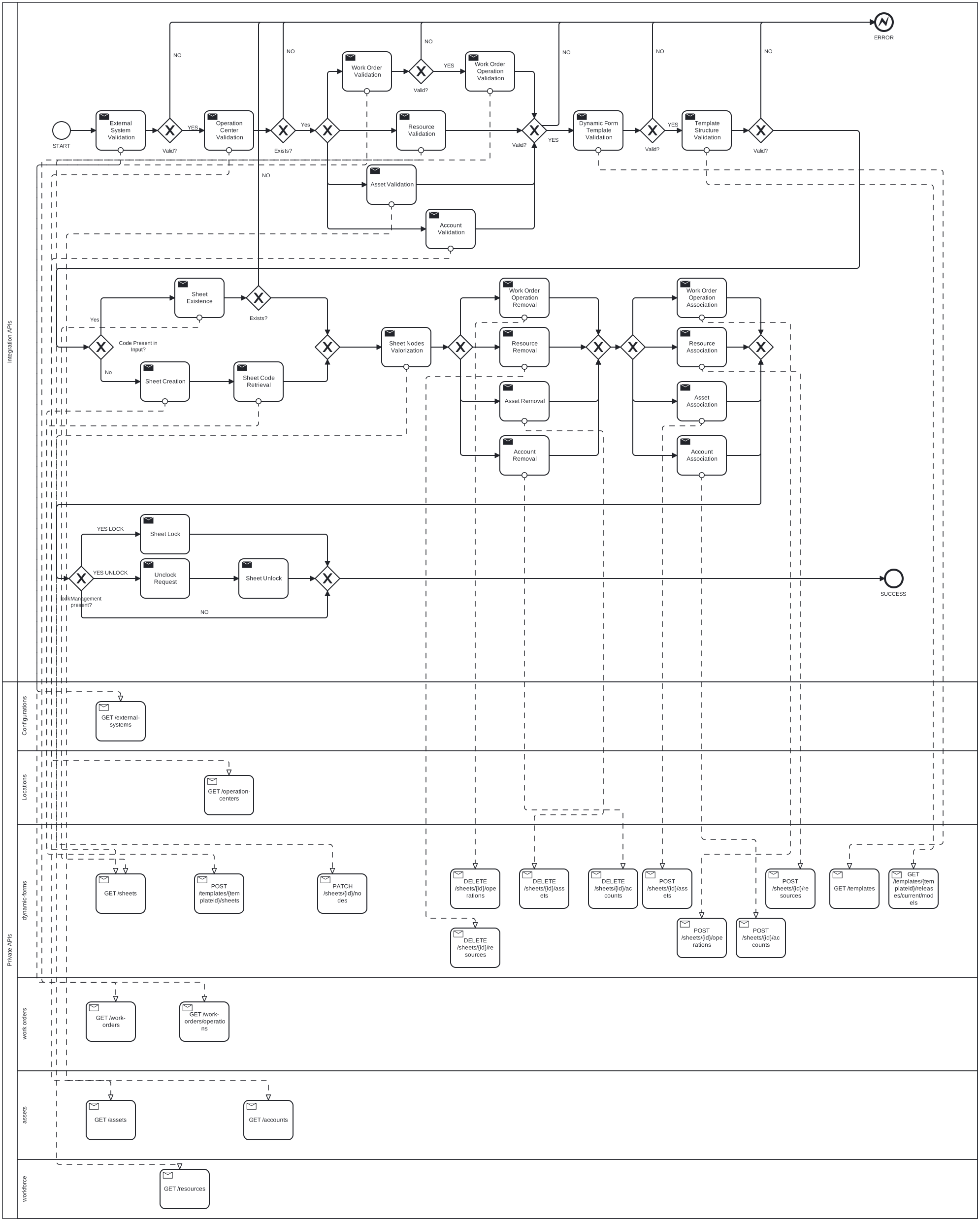
BPMN Diagram
Business Logic
This Integration API creates or updates a Dynamic Form Sheet.
System verifies that only one between workOrderOperation, resource, asset and account object is present, because it is not possibile to have a sheet associated to multiple entities:
-
If workOrder is populated: system verifies that at least one of the fields workOrder.code or workOrder.externalCode is present.
-
If resource is populated: system verifies that at least one of the fields resource.identificationNumber or resource.secondaryIdentificationNumber is present.
-
If asset is populated: system verifies that at least one of the fields asset.externalCode or asset.code is present.
-
If account is populated: system verifies that at least one of the fields account.externalCode or account.code is present.
System verifies Permission Required and starts the elaboration that is organized in steps.
STEP 1 - External System Validation
System takes Input fields and checks their existence in internal configuration.
API Verb: GET
Resource: External Systems
Input: externalSystemCode, active=true
Output: externalSystemId
If System can obtain the Output fields → continue to next step.
If System can’t obtain the Output fields → responds with error. Elaboration is stopped.
STEP 2 - Operation Center Validation
System takes Input fields and checks their existence in internal configuration.
API Verb: GET
Resource: Operation Centers
Input: operationCenterCode, active=true
Output: operationCenterId
If System can obtain the Output fields → continue to next step.
If System can’t obtain the Output fields → responds with error. Elaboration is stopped.
STEP 3 - Work Order Validation
System takes Input fields and checks their existence.
This step is skipped if workOrder is absent.
API Verb: GET
Resource: Work Orders
Input: [workOrder.code] OR [externalSystemId, workOrder.externalCode], operationCenterId
Output: workOrderId
If System can obtain the Output fields → continue to next step.
If System can’t obtain the Output fields → responds with error. Elaboration is stopped.
STEP 3b- Work Order Operation Validation
System takes Input fields and checks the existence of the operation. If workOrderOperation is absent system checks if input work order has only one operation.
API Verb: GET
Resource: Work Order Operations
Input: workOrderId, [workOrderOperation.operationExecutionOrder] OR [workOrderOperation.operationCode]
Output: workOrderOperationId
If System can obtain the Output fields and workOrderOperation.operationExecutionOrder is not null OR workOrderOperation.operationCode is not null → continue to next step.
If System can obtain the Output fields and both workOrderOperation.operationExecutionOrder and workOrderOperation.operationCode are null, checks if the number of workOrderOperationId is equal to one → continue to next step.
If System can’t obtain the Output fields or the number of workOrderOperationId is not equal to one→ responds with error. Elaboration is stopped.
STEP 4 - Resource Validation
System takes Input fields and checks the existence of the resource.
This step is skipped if resource is absent.
API Verb: GET
Resource: Resources
Input: operationCenterId, [resource.identificationNumber] OR [resource.secondaryIdentificationNumber]
Output: resourceId
If System can obtain the Output fields → continue to next step.
If System can’t obtain the Output fields → responds with error. Elaboration is stopped.
STEP 5 - Asset Validation
System takes Input fields and checks the existence of the asset.
This step is skipped if asset is absent.
If System can obtain the Output fields → continue to next step.
If System can’t obtain the Output fields → responds with error. Elaboration is stopped.
STEP 6 - Account Validation
System takes Input fields and checks the existence of the account.
This step is skipped if account is absent.
If System can obtain the Output fields → continue to next step.
If System can’t obtain the Output fields → responds with error. Elaboration is stopped.
STEP 7 - Dynamic Form Template Validation
System takes Input fields and checks their existence.
If System can obtain the Output fields → continue to next step.
If System can’t obtain the Output fields → responds with error. Elaboration is stopped.
STEP 8 - Dynamic Form Template Structure Validation
System verifies that list of node.code in input matches correctly with dynamic form template nodes codes.
System takes Input fields and checks their existence.
This step is skipped if node field is absent.
API Verb: GET
Resource: Dynamic Forms Templates Release Current Models
Input: templateId
Output: list of [children.node.id, children.node.properties.code, children.node.type.name]
If System can obtain the Output fields and all children.node.properties.code match with input nodes.code fields → continue to next step.
If System can obtain the Output fields and not all children.node.properties.code match with input nodes.code fields → responds with error. Elaboration is stopped.
If System can’t obtain the Output fields → responds with error. Elaboration is stopped.
STEP 9 - Dynamic Form Sheet Existence
System takes Input fields and checks their existence.
This step is skipped if sheet.code is absent.
API Verb: GET
Resource: Dynamic Form Sheets
Input: code
Output: sheetId, statusId, workOrderOperationId, resourceId, accountId, assetId
If System can obtain the Output fields → continue to step Nodes Valorization.
If System can’t obtain the Output fields → responds with error. Elaboration is stopped.
STEP 10 - Dynamic Form Sheet Creation
System takes Input fields and checks their existence.
API Verb: POST
Resource: Dynamic Forms Templates / Sheet
Input: templateId, operationCenterId, list of [description.lang, description.value]
Output: sheetId
If Response State is SUCCESS → continue to next step.
If Response State is ERROR → elaboration is stopped. See Response payload fields.
Error Type:
-
Others - see link in Resource
STEP 11 - Sheet Code Retrieval
System takes Input fields and retrieve the sheet code to be returned in response payload.
This step is skipped if sheet.code is present.
If Response State is SUCCESS → elaboration is stopped. See Response payload fields.
If Response State is ERROR → elaboration is stopped. See Response payload fields.
Error Type:
-
Others - see link in Resource
STEP 12 - Nodes Valorization
System updates the Dynamic Form Sheet structure.
API Verb: PATCH
Resource: Dynamic Sheet Nodes
Input: sheetId, list of [id, type.name, nodes.value(=type.value)]
Output: Response State
If Response State is SUCCESS → continue to next step.
If Response State is ERROR → elaboration is stopped. See Response payload fields.
Error Type:
-
Others - see link in Resource
STEP 13 - Entity Association
System compares the entity currently associated to sheet with the entity provided in the input payload and determines if a swap or removal is required.
-
Current Entity: Can be resourceId (step Dynamic Form Sheet Existence), assetId (step Dynamic Form Sheet Existence), accountId (step Dynamic Form Sheet Existence) or workOrderOperationId (step Dynamic Form Sheet Existence).
-
Target Entity: Can be resourceId (step Resource Validation), assetId (step Asset Validation), accountId (step Account Validation) or workOrderOperationId (step Work Order Operation Validation)
STEP 13a - Work Order Operation Removal
System takes Input fields and deletes current Work Order Operation association to Sheet.
This step is skipped if current workOrderOperationId is absent or current workOrderOperationId is equal to target workOrderOperationId
If Response State is SUCCESS → continue to next step.
If Response State is ERROR → elaboration is stopped. See Response payload fields.
Error Type:
-
Others - see link in Resource
STEP 13b - Resource Removal
System takes Input fields and deletes current Resource association to Sheet.
This step is skipped if current resourceId is absent or current resourceId is equal to target resourceId
If Response State is SUCCESS → continue to next step.
If Response State is ERROR → elaboration is stopped. See Response payload fields.
Error Type:
-
Others - see link in Resource
STEP 13c - Asset Removal
System takes Input fields and deletes current Asset association to Sheet.
This step is skipped if current assetId is absent or current assetId is equal to target assetId
If Response State is SUCCESS → continue to next step.
If Response State is ERROR → elaboration is stopped. See Response payload fields.
Error Type:
-
Others - see link in Resource
STEP 13d - Account Removal
System takes Input fields and deletes current Account association to Sheet.
This step is skipped if current accountId is absent or current accountId is equal to target accountId
If Response State is SUCCESS → continue to next step.
If Response State is ERROR → elaboration is stopped. See Response payload fields.
Error Type:
-
Others - see link in Resource
STEP 13e - Work Order Operation Association
System takes Input fields and associate the target Work Order Operation to Sheet.
This step is skipped if target workOrderOperationId is absent or current workOrderOperationId is equal to target workOrderOperationId
API Verb: POST
Resource: Sheet Operations
Input: sheetId, workOrderOperationId
Output: Response State
If Response State is SUCCESS → continue to next step.
If Response State is ERROR → elaboration is stopped. See Response payload fields.
Error Type:
-
Others - see link in Resource
STEP 13f - Resource Association
This step is skipped if target resourceId is absent or current resourceId is equal to target resourceId
If Response State is SUCCESS → continue to next step.
If Response State is ERROR → elaboration is stopped. See Response payload fields.
Error Type:
-
Others - see link in Resource
STEP 13g - Asset Association
System takes Input fields and associate the target Asset to Sheet.
This step is skipped if target assetId is absent or current assetId is equal to target assetId
If Response State is SUCCESS → continue to next step.
If Response State is ERROR → elaboration is stopped. See Response payload fields.
Error Type:
-
Others - see link in Resource
STEP 13h - Account Association
System takes Input fields and associate the target Account to Sheet.
This step is skipped if target accountId is absent or current accountId is equal to target accountId
If Response State is SUCCESS → continue to next step.
If Response State is ERROR → elaboration is stopped. See Response payload fields.
Error Type:
-
Others - see link in Resource
STEP 14 - Sheet Unlock Management
These steps are skipped if lockManagement is absent or lockManagement value is ‘LOCK’.
STEP 14a - Sheet Unlock Request
System takes Input fields to request the Unlock of the Sheet.
If Response State is SUCCESS → continue to next step.
If Response State is ERROR → elaboration is stopped. See Response payload fields.
Error Type:
-
Others - see link in Resource
STEP 14b - Sheet Unlock
System takes Input fields to Unlock the Sheet.
If Response State is SUCCESS → continue to next step.
If Response State is ERROR → elaboration is stopped. See Response payload fields.
Error Type:
-
Others - see link in Resource
STEP 15 - Sheet Lock Management
System takes Input fields to Lock the Sheet.
These steps are skipped if lockManagement is absent or lockManagement value is ‘UNLOCK’.
If Response State is SUCCESS → continue to next step.
If Response State is ERROR → elaboration is stopped. See Response payload fields.
Error Type:
-
Others - see link in Resource
Path Parameters
As their name suggests, they are included in the URL path of the endpoint.
Not applicable.
Query String Parameters
Start with a ? and includes parameters listed one after the another separated by &.
Not applicable.
Header Parameters
Parameters included in the request headers. Generally, request headers are used to keep authorization parameters.
Default.
Request Body Parameters
Request body parameters are used when clients send data to the API. They are shipped in a JSON Object only in POST, PUT, or PATCH requests.
|
Field |
Description |
Mandatory |
Constraint |
|||
|---|---|---|---|---|---|---|
|
1 |
sheet |
externalSystemCode |
|
External System Code |
Y |
Not Blank |
|
2 |
operationCenterCode |
|
Operation Center Code |
Y |
Not Blank |
|
|
3 |
code |
|
Sheet Code |
N |
Absent or Not Blank |
|
|
4 |
templateCode |
|
Template Code |
Y |
Not Blank |
|
|
5 |
description (minOccurs=0, maxOccurs=N) |
lang |
Sheet Description Language |
Y |
Absent or not blank |
|
|
6 |
value |
Sheet Description Value |
Y |
|
||
|
7 |
lockManagement |
|
Allows to lock or request the unlock of the sheet. |
N |
Absent or not blank. Accepted values:
|
|
|
8 |
nodes (minOccurs=0, maxOccurs=N) |
code |
|
Sheet Node Code |
Y |
Absent or Not Blank |
|
9 |
value |
|
Sheet Node Value |
Y |
Absent or Not Blank |
|
|
10 |
workOrder |
code |
|
Work Order Code |
N |
Absent or Not Blank |
|
11 |
externalCode |
|
Account Code |
N |
Absent or Not Blank |
|
|
12 |
workOrderOperation |
operationCode |
Operation Code |
N |
Absent or Not Blank |
|
|
13 |
operationExecutionOrder |
Operation Execution Order |
N |
Absent or Not Blank |
||
|
14 |
resource |
identificationNumber |
|
Resource Identification Number |
N |
Absent or Not Blank |
|
15 |
secondaryIdentificationNumber |
|
Resource Secondary Identification Number |
N |
Absent or Not Blank |
|
|
16 |
asset |
code |
|
Asset Code |
N |
Absent or Not Blank |
|
17 |
externalCode |
|
Asset External Code |
N |
Absent or Not Blank |
|
|
18 |
account |
code |
|
Account Code |
N |
Absent or Not Blank |
|
19 |
externalCode |
|
Account External Code |
N |
Absent or Not Blank |
|
The objects in input could have also the extension object that allows to add additional, customized data to this API. More info here How to use APIs: Custom data via Extension.
Request example
Creation example - Work Order Case
{
  "extension":{
      "myFieldName":"myValue"
   },
    "sheet": {
        "extension":{
            "myFieldName":"myValue"
        },
        "externalSystemCode": "SAP",
        "operationCenterCode": "OCENW",
        "templateCode": "INT_API",
        "code": "OCENW-2602100902292753038",
        "description": [
            {
                "lang": "en",
                "value": "Sheet Test"
            }
        ]
    },
    "nodes": [
        {
            "code": "INFO",
            "value": "Test String"
        },
        {
            "code": "VALUE",
            "value": 123
        },
        {
            "code": "MULTI",
            "value": "OPT1"
        }
    ],
    "workOrder": {
      "extension":{
        "myFieldName":"myValue"
       },
        "code": "OCENW00001",
        "workOrderOperation": {
            "operationExecutionOrder": 4
        }
    }
}
Response documentation
Response payload fields
Compliant with RFC Standard https://www.rfc-editor.org/rfc/rfc9457.html
Extension fields:
|
Field |
Description |
Note |
|---|---|---|
|
code |
Code of the Dynamic Form |
Only for SUCCESS |
|
code |
Extension member of a Problem Details Object that contains the error code |
Only for ERROR |
|
instanceCode |
Code of generated resource |
Only for ERROR |
Response example
{
  "code": "OCENE-26010716253545645"
}
{
  "type": "about:blank",
  "title": "Not Found",
  "status": 404,
  "detail": "External system string does not exist",
  "instance": "/integration/work-orders/r1/documents",
  "instanceCode": "DCS001",
  "code": "IA001_001"
}
Response error codes